The Question We Rarely Ask
You have just checked out of your hotel. The bed is made, and the towels are folded. But there’s a half-used bar soap and a tiny shampoo bottle you’re leaving behind from the mini toiletries. Where does it go?

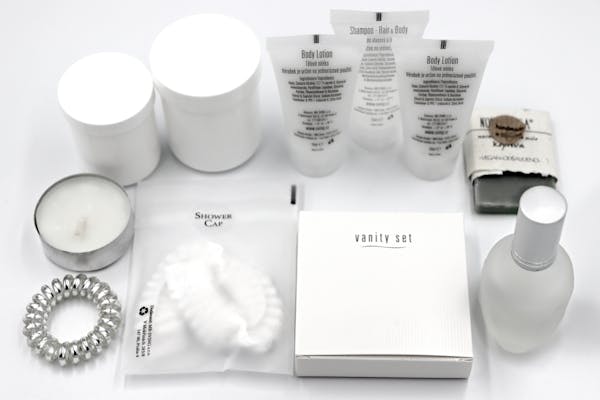
The Dirty Truth About Hotel Waste
- 5 million pieces of half-used hotel soaps end up in landfills every single day in the US alone, and the UK hotel industry trashes an estimated 20 million partly used bars every year.
- In a month, a four-star hotel with 200 rooms can use approximately 300,000 pieces of single-use plastic, including mini shampoo bottles, conditioner, body wash containers, lotion tubes, and soap wrappers.
- This waste ends up in landfills and has far-reaching impacts on the environment through air, water, and land pollution, biodiversity loss, carbon emissions, and health risks to communities.
- As of 2022, Dr. Mireia Guix, Lecturer in tourism at UQ Business School, in a UNEP Report, indicated that almost half of the 50 largest hotel groups (48%) do not report on waste, and 26% of companies in the hospitality sector have no sustainability information in their reports or website.
- An estimated USD 252 billion was spent on managing waste directly worldwide in 2020. The cost increases to USD 361 billion when the hidden costs of climate change, pollution, and poor health due to improper waste disposal methods are taken into account. If waste management is not addressed immediately, this yearly global cost might nearly triple to an astounding USD 640.3 billion by 2050 (UNEP report).
Meet the Soap Saviours: Unisoap and Clean the World
The rare question mentioned above (Where does my leftover soap go?) led Pauline Grumel, founder of Unisoap, and Shawn Seipler, founder of Clean the World, to take action. This simple moment of curiosity led to organisations that now divert millions of used soap bars and single-use plastics from landfills.
Unisoap was founded in 2018 when the association partnered with one hotel in Lyon, France. This was just the start, as hotels soon began visiting Unisoap independently to join the movement due to the increasing number of guests who choose hotels based on CSR commitment. The organization now collects used soap from 390 hotels in 110 cities in France, recycles it, and distributes the new bars to communities in need in France and abroad. In 2023, Unisoap established its first branch overseas in the United Arab Emirates in collaboration with the social company Goumbook.
On a much larger scale, Clean the World, founded in 2009, partners with more than 8300 hotels across the world in the United States of America, the Dominican Republic, Canada, the Netherlands, China, and Singapore to divert their soap bars and plastic amenities from landfills and recycle the collected soap into new bars. Over 1.4 million hotel rooms are processed daily under this initiative. CTW also hosts impact events where organisations, teams, or families can build hygiene kits through one of CTW Events Impact Experiences, such as a Soap Saves Lives Experience.
How Soap Gets a Second Life
For Unisoap, hotel cleaning staff collect the slightly used bars, many of which have only been used once, and pack them in Unisoap-provided boxes, which are picked up when they are full, typically containing 10–15 kg of soap. The soap is then heated and reformed into new bars at a plant near Lyon that was established to assist disabled people in finding employment. Cosmetics industry consultants make sure the new bars adhere to the hygienic requirements for soap supplied in France.
In order to partially offset the costs of transportation and recycling, hotels join Unisoap as patrons and donate. The remaining funds are provided by corporate sponsorship, government subsidies, and supporter donations.
After collecting used soap, Clean the World grinds the soap into pellets, sterilizes the soap, and finely refines it to eliminate any foreign particles. The soap is then sterilized, refined again, and manufactured into brand-new bars of soap, with Biological Consulting Services Laboratory, a fully accredited third-party laboratory, consulted to rigorously test the brand new bars for safety, quality, and compliance with international health standards. The whole recycling process is summarized below:

The Environmental Impact
Unisoap and Clean the World deliver real, measurable impact in an era where greenwashing is rampant and companies flaunt eco-buzzwords without backing them up. Clean the World has reduced pollution, saved water, and decreased the carbon footprint of thousands of hotels globally as follows:

These numbers are more than statistics; they represent lives improved, waste reduced, and a cleaner, healthier planet thanks to the simple act of recycling soap.
More Than Just Soap: Health and Dignity
The French Daily News data in 2021 indicates that 3 million French people go without basic hygiene products such as soap, shampoo, and toothpaste. By collecting and recycling soap from hotels throughout France and giving it to underserved regions through charitable organizations, Unisoap is attempting to fill this gap while also reducing waste and increasing awareness of hygiene disparities.
According to UNICEF, 1.4 million children across the world die from diseases such as Cholera and pneumonia that can be prevented with good hygiene practices. Thus, once Clean the World repurposes soap and it is ready for its second life, it works with humanitarian partners like UNICEF, United Nations High Commissioner for Refugees, World Vision, and Children International to determine where the soap is most needed around the world. The organization also donates new soap bars to global NGOs, such as The WASH Foundation, which collaborate with nearby clinics and schools, teaching children proper hygiene practices and keeping an eye on their efficacy.
Following the 2010 earthquake, Clean the World was instrumental in supplying soap to Haitian citizens as well as refugees from Somalia and Syria. Countries including the Philippines, Zambia, and Honduras have received the most soap by volume from Clean the World, helping improve the lives of women, children, and communities. In the wake of the recent Los Angeles fires from January 7, 2025, Clean the World sent hygiene kits to those affected.
Clean the World also restores health and dignity to people experiencing homelessness through the Fresh Start Mobile Showers, which provide hot showers and hygiene supplies in cities across the United States. Established in 2017, the Program has become a driving force towards a successful transition to housing, treatment, and job placement services for underserved communities.
Given that hygiene impacts not only health but also people’s integrity and dignity, it is imperative that as many people as possible have access to it.
How You Can Be Part of the Solution
Simple decisions, like where you stay, are the first steps toward making a difference. By selecting hotels that collaborate with Unisoap, you can help the organization’s goal while visiting France. Their website’s interactive map makes it simple to find participating hotels and make a direct contribution to waste reduction and hygiene access. With more than 51 million soaps thrown away by French hotels every year, there is a huge opportunity for change, and this journey is just getting started. Your daily choices can have a genuine, long-lasting impact and help preserve resources by helping groups like Unisoap and Clean the World.
Refillables Are Rising: Where Does Soap Recycling Go From Here?
As hotels seek to phase out single-use plastics and replace them with in-built refillable options, Clean the World and Unisoap, might need to adapt their operations and focus on new types of waste streams.
Refillables and recycling are ultimately complimentary instruments in a larger endeavor toward sustainability rather than competitors. The important thing is to make sure that equity is not overshadowed by eco-efficiency and that access to sanitary facilities remains part of the green equation.
The Final Rinse
The next time you pack your suitcase and leave behind a barely touched bar of soap, you’ll know: it doesn’t have to go to waste. With organizations like Unisoap and Clean the World, even soap gets a second chance, and so does our planet.